Introduction
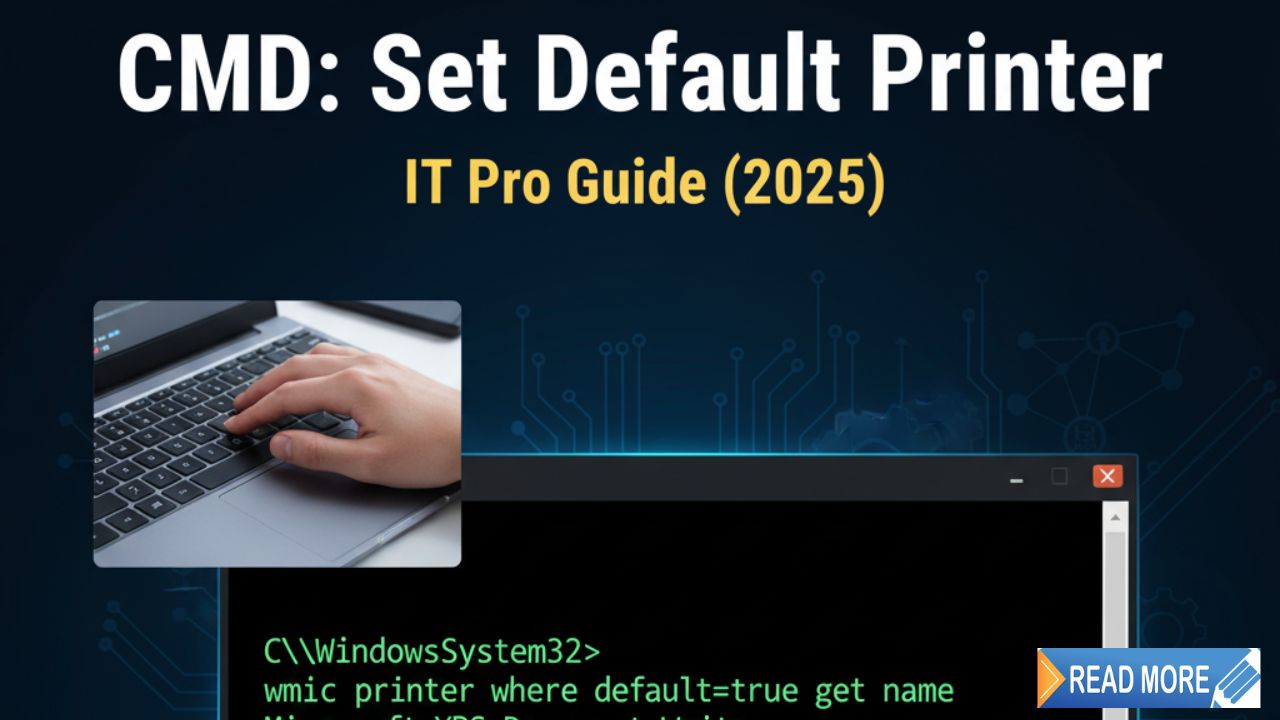
When you need to set default printer command prompt methods become essential tools for IT professionals managing multiple computers. The GUI works fine for one machine, but imagine configuring default printers across 50 workstations manually—that’s hours of wasted time clicking through settings.
Using command prompt to set default printer command prompt configurations lets you automate deployments, create login scripts, apply Group Policy settings, and troubleshoot printer issues remotely without touching each computer. It’s faster, scriptable, and essential knowledge for any IT administrator managing Windows environments.
Whether you’re deploying printers to new employees, fixing printer problems remotely, or standardizing configurations across departments, knowing how to set default printer command prompt style saves massive amounts of time and eliminates human error from repetitive tasks.
This guide covers every method to set default printer command prompt approaches support: traditional CMD commands, modern PowerShell scripts, batch files for automation, VBScript options, and Group Policy integration. I’ll show you practical examples you can use immediately in real IT environments.
What Is Setting a Default Printer via Command Prompt?
To set default printer command prompt methods mean using text-based commands instead of graphical interfaces to designate which printer Windows uses automatically when applications print without user selection.
When you set default printer command prompt style, you’re modifying Windows registry settings or printer configurations through command-line tools. The operating system then remembers this preference and routes all print jobs to your specified printer unless users manually select a different one.
Why IT professionals prefer command line methods:
Automation: Create scripts that run on dozens or hundreds of computers simultaneously without manual intervention.
Remote management: Set default printer command prompt commands work through remote desktop, PsExec, or remote PowerShell sessions without needing physical access.
Consistency: Eliminate human error by deploying identical configurations to entire departments or office locations.
Speed: Configure printers on multiple machines in seconds instead of minutes per machine using GUI.
Integration: Incorporate printer settings into login scripts, Group Policy, or software deployment systems.
The ability to set default printer command prompt style is particularly valuable in scenarios like:
- Setting up new employee workstations with standardized configurations
- Changing default printers for entire departments when hardware is replaced
- Creating roaming user profiles that apply consistent printer settings
- Troubleshooting printer issues remotely through command line tools
- Building automated deployment systems that configure everything including printers
According to Microsoft’s official documentation, Windows provides multiple command-line tools for printer management, each with specific use cases and advantages.
6 Methods to Set Default Printer Command Prompt Style for IT Professionals

Let me walk you through every reliable method to set default printer command prompt configurations. Start with the method that best fits your environment and technical requirements.
Method 1: Using WMIC Command (Works on Windows 7-10)
WMIC (Windows Management Instrumentation Command-line) is the traditional way to set default printer command prompt operations before PowerShell became standard.
First, list all installed printers to get the exact name:
cmd
wmic printer get name,defaultThis displays every printer with its full name and whether it’s currently the default. Copy the exact printer name including any spaces or special characters.
To set default printer command prompt using WMIC:
cmd
wmic printer where name="printer_name_here" call setdefaultprinterReplace printer_name_here with your actual printer name. For network printers, include the full path like \\ServerName\PrinterName.
Example for a network printer:
cmd
wmic printer where name="\\PRINTSERVER\HP-LaserJet-4050" call setdefaultprinterImportant notes about WMIC:
- Printer names are case-sensitive in some Windows versions
- Include the full UNC path for network printers
- WMIC is deprecated in Windows 11 but still works in Windows 10
- Requires administrative privileges to modify printer settings
WMIC provides reliable method to set default printer command prompt style across Windows 7, 8, and 10 environments.
Method 2: Using PowerShell (Recommended for Modern Windows)
PowerShell is the modern, preferred way to set default printer command prompt configurations, especially in Windows 10 and 11 environments.
List all printers with PowerShell:
powershell
Get-Printer | Select-Object Name, DefaultThis shows printer names formatted correctly for PowerShell commands.
To set default printer command prompt using PowerShell:
powershell
Set-Printer -Name "printer_name" -DefaultReplace printer_name with your printer’s exact name from the Get-Printer output.
Example setting a network printer as default:
powershell
Set-Printer -Name "\\PrintServer\Accounting-HP" -DefaultPowerShell advantages for IT professionals:
Works on Windows 7+ with PowerShell 3.0 or later. More reliable than WMIC on Windows 10 and 11. Better error handling and feedback messages. Integrates seamlessly with PowerShell scripts and automation. Supports pipeline operations for batch processing.
Setting default printer for specific user (requires admin):
powershell
$printerName = "\\PrintServer\HP-LaserJet"
Set-ItemProperty -Path "HKCU:\Software\Microsoft\Windows NT\CurrentVersion\Windows" -Name "Device" -Value "$printerName,winspool,Ne00:"
PowerShell is the most reliable modern method to set default printer command prompt operations across enterprise environments.
Method 3: Using Rundll32 with printui.dll

This method uses Windows’ print UI DLL directly to set default printer command prompt style without requiring third-party tools.
Basic syntax to set default printer:
cmd
rundll32 printui.dll,PrintUIEntry /y /n "printer_name"The /y flag sets the specified printer as default. The /n flag specifies the printer name.
Example for local printer:
cmd
rundll32 printui.dll,PrintUIEntry /y /n "HP LaserJet Pro"Example for network printer:
cmd
rundll32 printui.dll,PrintUIEntry /y /n "\\PRINTSERVER\Reception-Canon"Additional useful printui.dll commands for IT pros:
Install network printer:
cmd
rundll32 printui.dll,PrintUIEntry /in /n "\\SERVER\Printer"Delete a printer:
cmd
rundll32 printui.dll,PrintUIEntry /dl /n "printer_name"Open printer properties:
cmd
rundll32 printui.dll,PrintUIEntry /p /n "printer_name"The rundll32 method to set default printer command prompt operations works reliably across all Windows versions and doesn’t require PowerShell or WMIC.
Method 4: Creating Batch Files for Automated Deployment
Batch files let you automate the process to set default printer command prompt configurations across multiple computers or deploy with login scripts.
Create a simple batch file (SetDefaultPrinter.bat):
batch
@echo off
echo Setting default printer...

wmic printer where name="\\PRINTSERVER\HP-Office" call setdefaultprinter

if %errorlevel%==0 (
    echo Default printer set successfully!
) else (
    echo Error setting default printer. Error code: %errorlevel%
    pause
)
Save this as SetDefaultPrinter.bat and run with administrative privileges.
Advanced batch file with printer detection:
batch
@echo off
REM Check if printer is installed before setting default
wmic printer where name="\\PRINTSERVER\HP-Office" get name >nul 2>&1

if %errorlevel%==0 (
    echo Printer found. Setting as default...
    wmic printer where name="\\PRINTSERVER\HP-Office" call setdefaultprinter
    echo Default printer set!
) else (
    echo Printer not installed. Installing first...
    rundll32 printui.dll,PrintUIEntry /in /n "\\PRINTSERVER\HP-Office"
    timeout /t 5
    wmic printer where name="\\PRINTSERVER\HP-Office" call setdefaultprinter
)
Deploying batch files to set default printer command prompt automatically:
Place batch file in Group Policy startup/login scripts. Deploy through SCCM or other software management tools. Run remotely using PsExec across multiple machines. Include in new employee setup automation scripts.
Batch files provide simple, repeatable way to set default printer command prompt configurations without manual intervention.
Method 5: Using Group Policy Preferences
For domain environments, Group Policy is the enterprise-grade way to set default printer command prompt settings across entire organizational units.
Setting default printer via Group Policy:
Open Group Policy Management Console (gpmc.msc). Create or edit a Group Policy Object for your target computers. Navigate to: User Configuration > Preferences > Control Panel Settings > Printers.
Right-click Printers > New > Shared Printer. Select “Update” action type. Enter printer path: \\ServerName\PrinterName. Check “Set this printer as the default printer”. Apply to appropriate user/computer groups.
Group Policy advantages:
Automatically applies to all computers in the OU. Updates if printer changes or moves servers. Removes printer configuration if policy is unlinked. Supports item-level targeting for specific users/groups. No scripts needed to set default printer command prompt style.
Group Policy with login scripts:
Alternatively, deploy your batch file or PowerShell script through Group Policy:
Computer Configuration > Policies > Windows Settings > Scripts > Startup (or Login).
This combines Group Policy’s deployment power with custom scripts to set default printer command prompt configurations exactly how you need them.
Method 6: Registry Modification (Advanced Method)
Direct registry editing lets you set default printer command prompt configuration at the lowest level, useful for troubleshooting or creating custom deployment tools.
Registry location for default printer:
HKEY_CURRENT_USER\Software\Microsoft\Windows NT\CurrentVersion\WindowsThe “Device” key stores the default printer:
cmd
reg add "HKCU\Software\Microsoft\Windows NT\CurrentVersion\Windows" /v Device /t REG_SZ /d "\\PRINTSERVER\HP-Office,winspool,Ne00:" /fBreaking down the registry value:
- Printer name:
\\PRINTSERVER\HP-Office - Print processor:
winspool - Port:
Ne00:(network port identifier)
Query current default printer from registry:
cmd
reg query "HKCU\Software\Microsoft\Windows NT\CurrentVersion\Windows" /v DeviceWarning about registry methods:
Direct registry editing bypasses Windows’ printer validation. Incorrect values can cause printing problems. Always test in non-production environment first. Requires understanding of printer port configurations.
Registry modification provides ultimate control to set default printer command prompt configurations but should be used carefully by experienced IT professionals only.
Essential Tools and Scripts for Managing Default Printers

Beyond basic commands, these tools enhance your ability to set default printer command prompt operations efficiently across enterprise environments.
PrintManagement PowerShell module:
Built into Windows Server and Windows 10. Provides comprehensive printer management cmdlets. Access with:
powershell
Import-Module PrintManagement
Get-Command -Module PrintManagement
Includes Set-PrintConfiguration, Add-Printer, Remove-Printer, and dozens more cmdlets for complete printer automation.
PsExec for remote execution:
Part of Sysinternals Suite, lets you set default printer command prompt remotely:
cmd
psexec \\RemotePC -u admin -p password cmd /c "wmic printer where name='\\SERVER\Printer' call setdefaultprinter"Invaluable for managing printers on remote computers without logging in.
Custom PowerShell functions:
Create reusable functions for common tasks:
powershell
function Set-DefaultPrinterByLocation {
    param([string]$Location)

    $printerMap = @{
        "Building-A" = "\\PRINTSERVER\BuildingA-HP"
        "Building-B" = "\\PRINTSERVER\BuildingB-Canon"
    }

    if ($printerMap.ContainsKey($Location)) {
        Set-Printer -Name $printerMap[$Location] -Default
        Write-Host "Default printer set for $Location"
    }
}
Save in your PowerShell profile for quick access to set default printer command prompt by office location.
Printer deployment software:
Enterprise tools like PrinterLogic, PaperCut, or Printix offer web interfaces for printer management but still use command-line methods behind the scenes to set default printer command prompt configurations.
Common Mistakes When Using Command Prompt to Set Default Printers
Avoid these errors that cause problems when you set default printer command prompt configurations.
Mistake 1: Incorrect printer name format
Using display names instead of system names. The printer shown in GUI might be “Office Printer” but the system name could be “\SERVER\HP-LaserJet-4050-Office”. Always use wmic printer get name or Get-Printer to get exact names before attempting to set default printer command prompt style.
Mistake 2: Missing administrative privileges
Many commands to set default printer command prompt require elevation. Always run Command Prompt or PowerShell as Administrator when modifying printer settings, especially on locked-down corporate workstations.
Mistake 3: Not verifying printer installation first
Trying to set default printer command prompt for a printer that isn’t installed fails silently in some cases. Always check if printer exists first:
powershell
if (Get-Printer -Name "\\SERVER\Printer" -ErrorAction SilentlyContinue) {
    Set-Printer -Name "\\SERVER\Printer" -Default
} else {
    Write-Warning "Printer not installed"
}
Mistake 4: Hardcoding printer servers in scripts
If your print server name changes, scripts break. Use variables or configuration files:
powershell
$printServer = "PRINTSERVER"
$printerName = "HP-Office"
Set-Printer -Name "\\$printServer\$printerName" -Default
Mistake 5: Ignoring “Let Windows manage default printer” setting
Windows 10+ has a feature that automatically changes default printer based on location. This overrides commands to set default printer command prompt. Disable it via Group Policy or registry:
cmd
reg add "HKCU\Software\Microsoft\Windows NT\CurrentVersion\Windows" /v LegacyDefaultPrinterMode /t REG_DWORD /d 1 /fMistake 6: Not testing scripts before deployment
Always test commands to set default printer command prompt on a few test machines before deploying to hundreds. A typo in printer name or wrong command syntax affects all machines if deployed through Group Policy or automation tools.
Mistake 7: Forgetting about user context
HKCU registry keys and some commands work per-user. If you set default printer command prompt in one user profile, it doesn’t affect other users on the same computer. For computer-wide settings, use HKLM keys or deploy through computer startup scripts instead of user login scripts.
Frequently Asked Questions
Q: Can I set default printer command prompt remotely for multiple computers simultaneously?
Yes. Use PsExec with a list of computer names, PowerShell remoting with Invoke-Command, or Group Policy for domain environments. Example with PowerShell remoting:
powershell
$computers = "PC01","PC02","PC03"
Invoke-Command -ComputerName $computers -ScriptBlock {
    Set-Printer -Name "\\SERVER\Printer" -Default
}
This executes the command to set default printer command prompt on all specified computers at once. Requires administrative access and PowerShell remoting enabled on target machines.
Q: Why does my command to set default printer command prompt work but revert after reboot?
Usually caused by Windows 10’s “Let Windows manage my default printer” feature. Disable it per-user with:
cmd
reg add "HKCU\Software\Microsoft\Windows NT\CurrentVersion\Windows" /v LegacyDefaultPrinterMode /t REG_DWORD /d 1 /fOr deploy via Group Policy under Computer Configuration > Administrative Templates > Windows Components > File Explorer. Set “Turn off Windows default printer management” to Enabled.
Q: What’s the difference between WMIC and PowerShell methods to set default printer command prompt?
WMIC is older, being deprecated, but still works on Windows 7-10. PowerShell is modern, more reliable on Windows 10/11, better error handling, and easier to script complex operations. For new deployments, use PowerShell. For legacy Windows 7/8 environments, WMIC still functions well. Both methods set default printer command prompt equally effectively when executed correctly.
Q: Can I set default printer command prompt based on network location or IP address?
Yes, with scripting. Check network information in PowerShell, then set appropriate printer:
powershell
$ip = (Get-NetIPAddress -AddressFamily IPv4 | Where {$_.IPAddress -like "10.1.*"}).IPAddress
if ($ip) {
    Set-Printer -Name "\\SERVER\Floor1-Printer" -Default
}
Deploy this in login scripts to automatically set default printer command prompt based on which office/floor users connect from.
Q: Do I need administrative rights to set default printer command prompt on Windows?
Generally yes for system-wide changes, but users can typically set default printer command prompt for their own profile without admin rights using PowerShell’s Set-Printer cmdlet. However, installing printers or modifying registry keys requires elevation. Domain Group Policy deployment requires admin/domain rights but then applies automatically to users without them needing elevation.
Conclusion
Learning to set default printer command prompt methods transforms how IT professionals manage printing infrastructure. Instead of manually configuring dozens of workstations, you can deploy printer settings instantly with a single command or script.
The key takeaways for successfully using commands to set default printer command prompt: PowerShell is the best modern approach for Windows 10/11, WMIC still works for legacy systems, batch files enable automation and deployment at scale, Group Policy provides enterprise-wide management, and registry modification offers ultimate control for advanced scenarios.
Start with simple PowerShell commands to set default printer command prompt for individual machines. Then progress to batch files for automation, remote execution with PsExec or PowerShell remoting, and finally Group Policy for enterprise deployment. Each method builds on the previous one, giving you more power and efficiency.
Whether you’re managing 5 computers or 500, knowing how to set default printer command prompt saves countless hours of repetitive GUI work. These commands and scripts are essential tools in every IT professional’s toolkit, enabling you to standardize configurations, troubleshoot remotely, and automate printer management completely.
Bookmark this guide and keep these commands ready—you’ll use them constantly in real IT environments.
Printing from Linux Ubuntu Setup Guide (Complete 2025) Read More.